Michael Stillion’s Fragmented Time
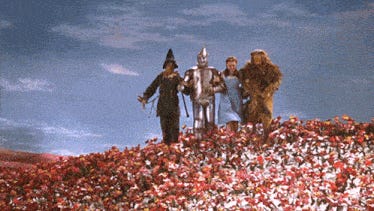
Cruel love, big hands, poppy fields of death

In 2004 I was standing in the Philip Guston retrospective at The Metropolitan Museum of Art with my emotionally abusive lover.
“Don’t cross your arms when you look at art,” he told me.
I uncrossed my arms.
Now whenever I come across a Guston I hear “I realized you don’t have a pretty face”, “if we stretched you out you’d be perfect”, and the classic “it’s better if you don’t tell your friends about us”.
Fortunately that situation soon ended. What remained with me, was Guston.
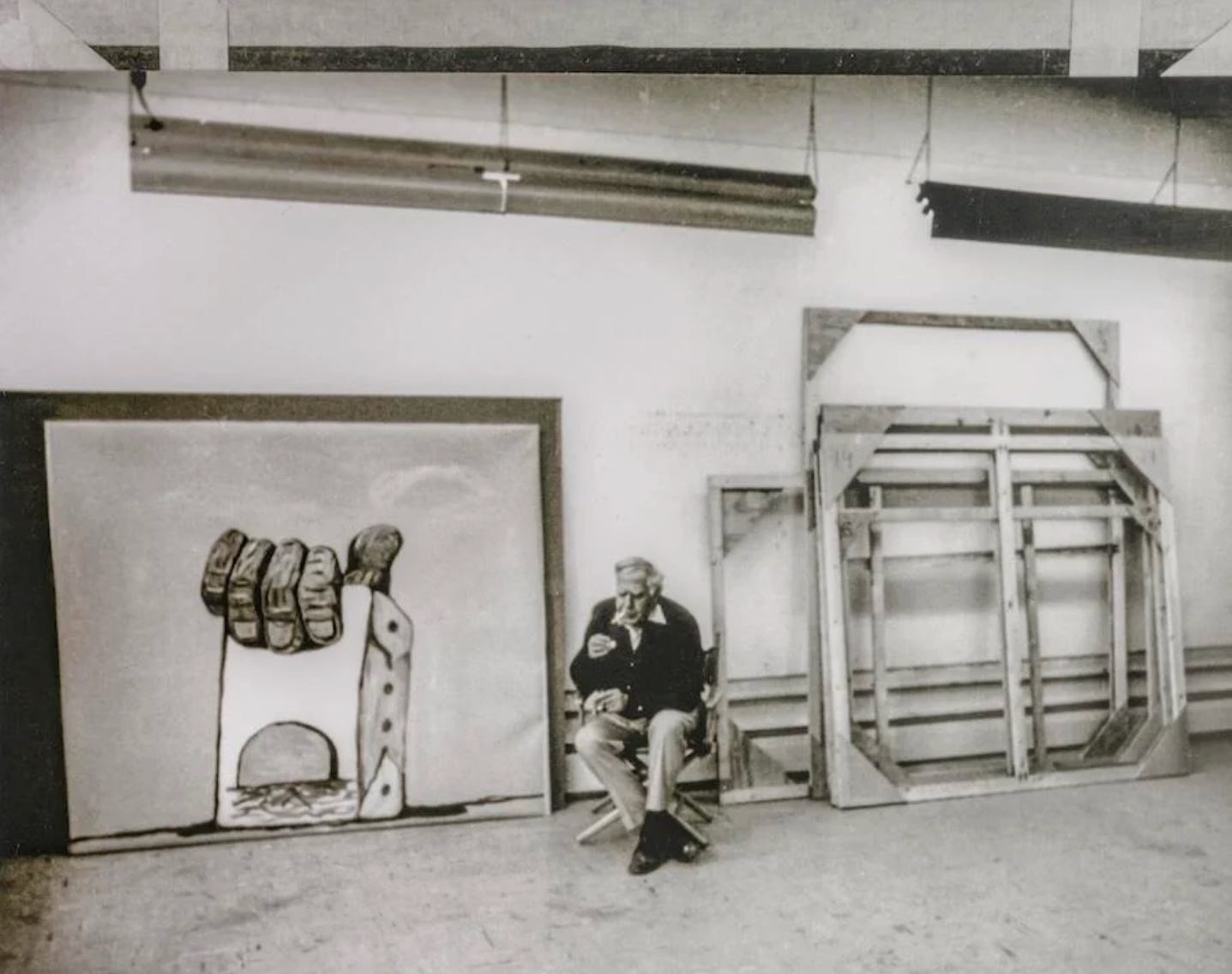
Michael Stillion’s paintings, currently on view at the Contemporary Arts Center in Cincinnati, reactivated in me a way of seeing that was shaped under pressure. My first reaction to the work was one of recognition — combined admiration and dread — at those thick hands and clown shoes echoed in Stillion’s earlier canvases, references I could never miss.
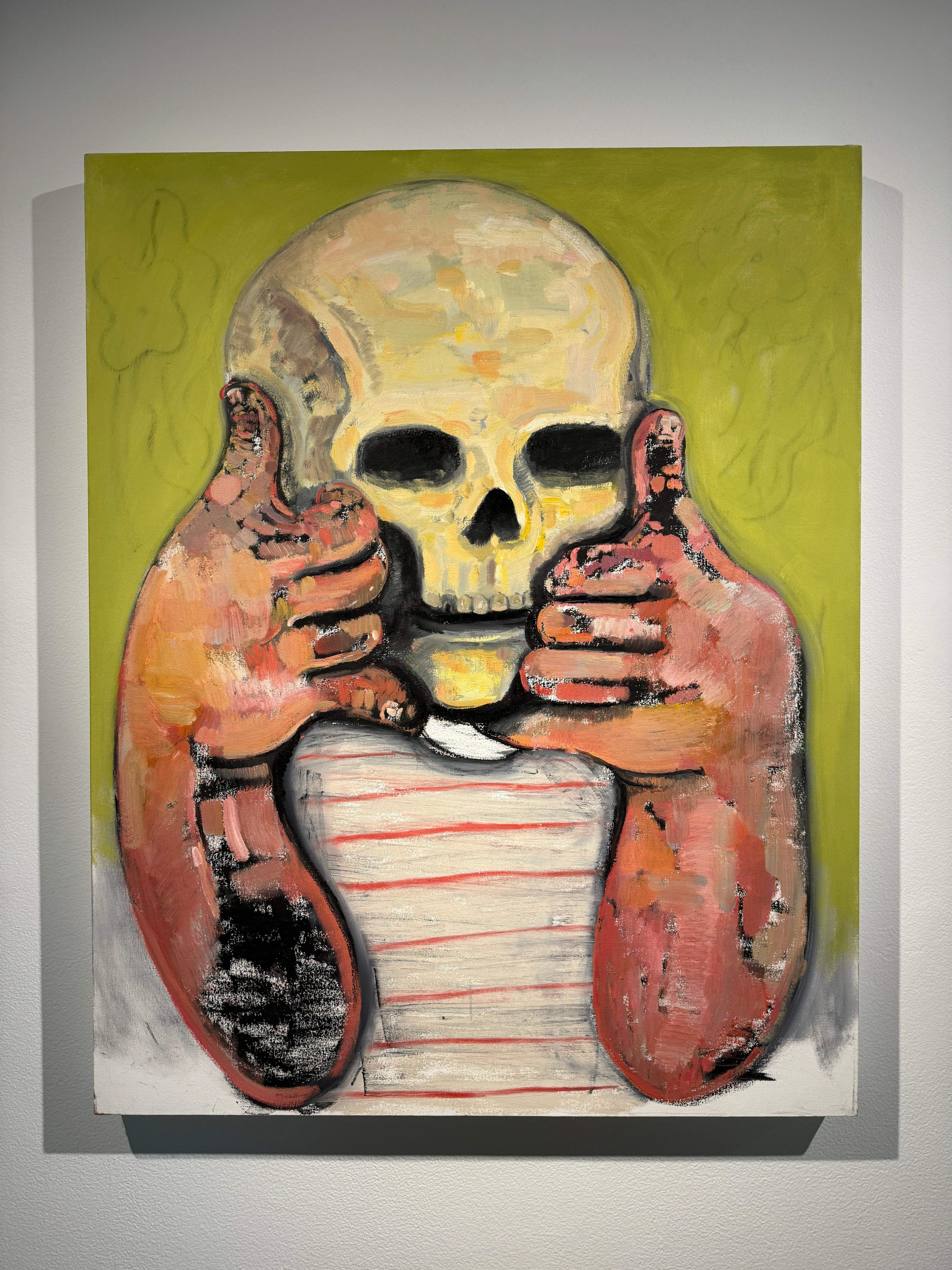
“And then it was flowers”, up through Sunday, August 30, pays tribute not just to Guston and other of Stillion’s heroes (Gen X icons like Michael Jordan and Bart Simpson), but to the passage of time itself. It’s a reminder of what can carry with you into a painting.
Stillion’s paintings are realistic in an uncanny manner, playing with dimensionality. It’s a trompe-l’oeil effect, but what is rendered — with noticeable care — exists on an unreal plane. It makes sense that the images are painted entirely from imagination.
A motif of cracked stone vessels are representative of the patina of time. In contrast, bursting at the seams alongside the monochromatic vessels are poppy flowers in vivid shades of cadmium.
Facial features anthropomorphize the vessels. Jack-o-lantern eyes squint while Ha cha cha Jimmy Durante noses extrude. It is a liar’s nose, a Pinocchio nose, complimenting the “trick of the eye” rendering — by definition a form of dishonesty placed upon the viewer.
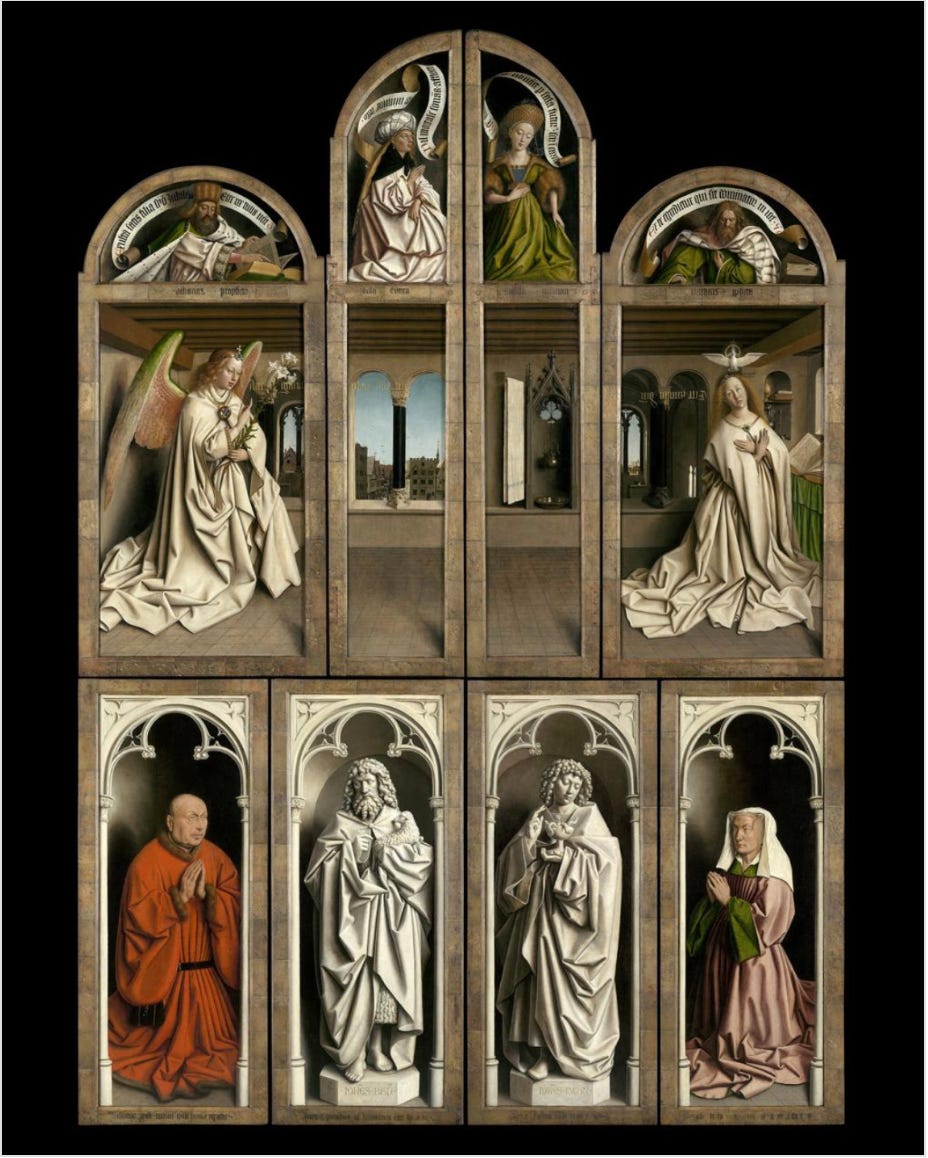
Burrowing into his studio when the COVID-19 pandemic erupted, Stillion slowed down and simplified his painting language, shifting to grisaille. Derived from the French for “grey”, it is a technique that blends the primary colors to achieve a greyscale palette. Grisaille was utilized by Renaissance painters like Jan Van Eyck, who played with perspective and, like Stillion, painted statues barely contained by rooms that resemble cremation niches.
Pieter Bruegel the Elder was another Northern Renaissance painter who experimented with grisaille to create a sculptural effect. He was nicknamed “Peasant Bruegel” for his depictions of rural life and landscapes — themes that siphon down to Stillion’s references to his hometown of Pleasant City, Ohio — population roughly 500.
Tendrils of smoke curl their way up through the composition of “Smoke Signals” (2024). The caricatured haze resembles gauze, like a burn bandage, or a wrapped mummy. The inspiration came from the frequency with which neighborhood residences have burned down whenever Stillion checks in on hometown news. The charred trailers and garages, where meth had been cooking or consumed, don’t even seem to make the local blotter. Stillion, through his work, queries the nonchalance of this loss.
“I’ve always been trying to paint things that are invisible,” Stillion told me in the Zaha Hadid-designed rooms of the CAC.
One painting, “Poppy Eyes III”, from 2023, has the requisite cracked vessel and cartoon nose, with tattered petals unfurling through an eye socket. It stands apart in its depiction of a shattered mirror, suggesting a pane that once protected the statue from the elements. Reflected in the remaining shards of glass is the environment that would be behind the spectator. A story of place unravels, of interior and exterior, of mortality and the role of the viewer.
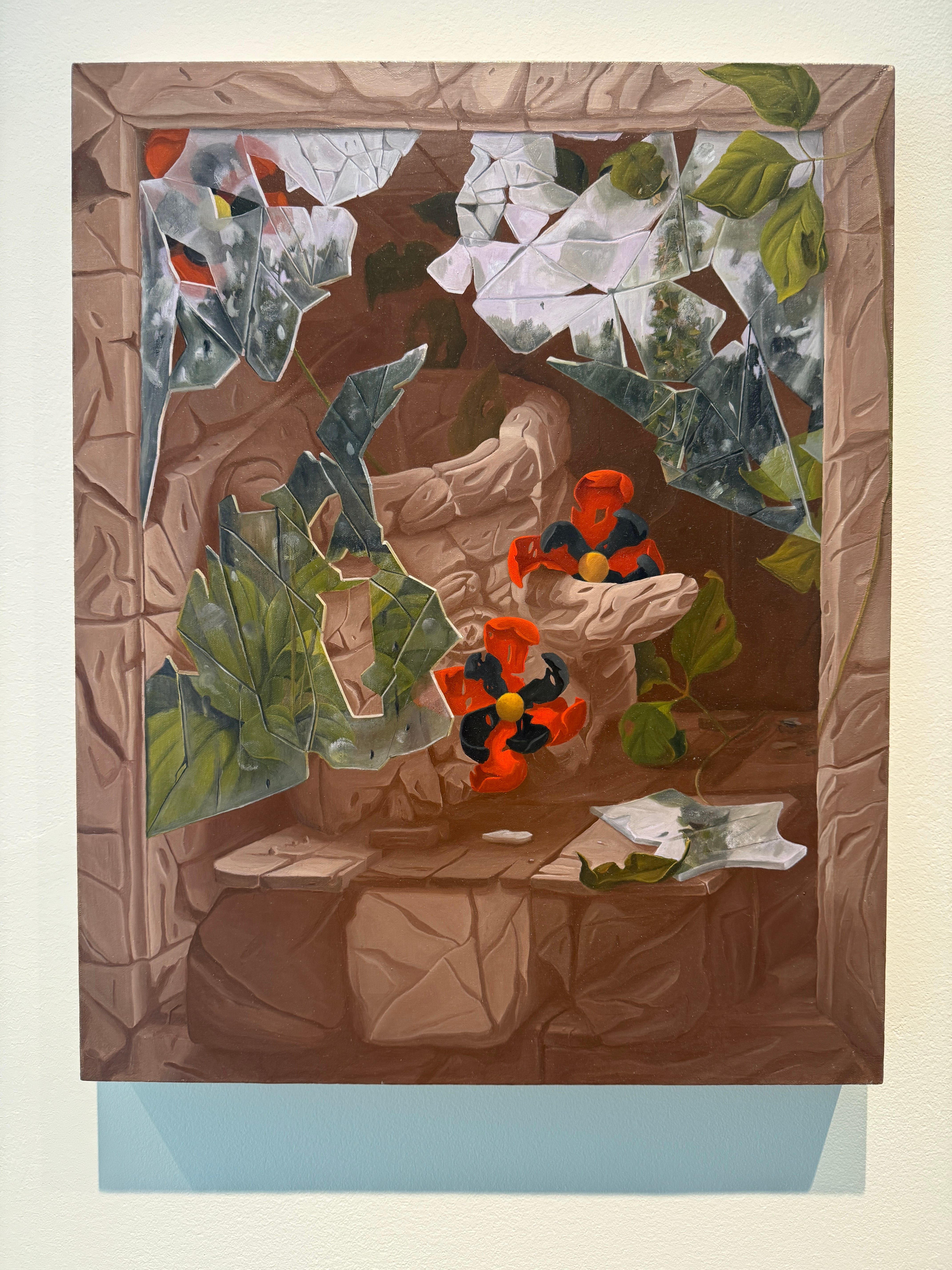
Clay, that most earthy of materials, is strangely unnatural in these paintings. Despite Stillion’s description that the vessels represent the subtle shift of time, they also seem to depict the imperfection and impatience of the human hand; when not conditioned or fired properly, natural clay develops cracks and breaks. The longevity — the structure itself — fails.
Through symbolic choices, Stillion’s work references the rural landscape of his youth. Exaggerated poppy flowers represent the biological source of opium. They serve as a reference to regions, including communities across Ohio, that are deeply impacted by the opioid epidemic.
The red poppy is the war memorial flower, a symbol of those lost in battle. Ironic that it is itself the cause of so much loss, that something natural and beautiful, when altered, becomes ugly, like the parched face of a junkie.
In Flanders fields the poppies blow
Between the crosses, row on row,
That mark our place; and in the sky
The larks, still bravely singing, fly
Scarce heard amid the guns below. (McCrae, 1915)
Stillion’s paintings sway in these contradictory frequencies, connecting youth and age, humor and heartbreak, realism and caricature. The title of the show came from Stillion’s effort to describe the process of a painting to a friend.
“It was one painting, and then it was another, and then it was flowers,” he said.
The evolution of the painting parallels what happens when a person dies. What is left, in the end, as a gesture of memorial and comfort? Flowers.
Meanwhile, on another timeline 22 years ago, the Metropolitan Museum show proposed a question through its title. “Philip Guston: What Kind of Man Am I?” was a through-line for that artist, and one my old lover would have done well to probe.
We carry these timeworn questions with us from one painting to the next.
Michael Stillion, And then it was flowers
Contemporary Arts Center (CAC)
44 E 6th St, Cincinatti
For hours and admission visit contemporaryartscenter.org
Through August 30, 2026